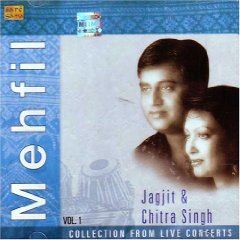
Mehfil
Jagjit and Chitra Singh (1990)
- Duniya jise kahte hai
- Kaun kaht hai
- Kiya hai pyar
- Honthon se chhoo lo tum
- tum to hain gham nahin sharab nahin
- Hum to hain pardes mein
- sunte hain ki mil jaati hai
- Hamardeep ghazlen ishq mein ghairat-e-jazbaat
- Medley of hits yeh daulat bhi le lo
Memorable Ghazals of Jagjit and Chitra (1990)
- Baat niklegi to phir door talak jayegi
Lyric: - Sarakti jaye hai rukhse naqab ahista ahista
Lyric: - Gham Badhe aate hain qatil ke nigahon ke tarah
- Pareshan raat sari hai sitaro tum to so jaao
- Dost ban ban ke mile mujhko mitane wale
Lyric: - Dil ko gham-e-hayat gawara hai in dinon
- Apne hathon ki lakeeron mein pasale mujh ko
- Angdai par angdai leti hai raat judai ke
- Sadma to hai mujhe bhi keh tujhse juda hoon main
- Humko dushman ki nigahon se
Lyric: - Pareshan raat sari hai sitaro tum to so jaao
Lyrics: - Aankh se aankh mila
- Socha nahin achha bura
- Pasine pasine hue ja rahe ho
- Bahut dinon ki baat hai
Someone Somewhere
Jagjit and Chitra Singh (1990)
HMV STHVS-63579
- Din guzar gaya
Lyric: Fayyaz Ahmed Fayyaz & Fana Nizami - Meri zindagi kisi aur ki
Lyric: Muzaffar Warsi - Ab ke barsat ki rut
Lyric: Muzaffar Warsi - Fasila to hai
Lyric: Shamim Karhani - Aadmi aadmi ko kya dega
Lyric: Sudarshan Faakir - Mere dukh ki koi dawa na karo
Lyric: Sudarshan Faakir - Koi samjhayega kya raz-e-gulshan
Lyric: Fana Nizami - Dekha to mera saaya bhi
Lyric: Ayaz Jhanswi - Dil hi to hai (not in cass)
Lyric: Ghalib
Hope
Jagjit and Chitra Singh (1991)
- Khuda humko aisi khudai na de
Lyric: Bashir Badr - Ab khushi hai na koi dard rulanevala
Lyric: Nida Fazli - Dekha jo aaina to mujhe sochna pada
Lyric: Farakh Roohvi - Na shivale na kalisa na haram jhoote hain
Lyric: Ayaz Jhansvi - Dhoop hai kya aur saaya kya
Lyric: Zafar Gorakhpuri - Kya khabar thi is taraha se woh juda ho jaayega
Lyric: Rustom Sehgal ‘wafa’ - Tanha tanha hum rolenge
Lyric: Nida Fazli - Aise hijr ke mausam
Lyric: Shahryar - Kabhi yun bhi aa meri aankh meein
Lyric: Bashir Badr
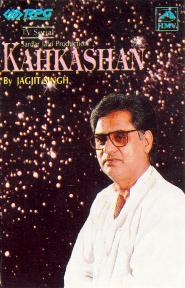
Kahkashan, the TV Serial
Jagjit Singh (1991)
Produced by: Ali Safdar Jafri
Directed by: Jalal Agha
Music Jagjit Singh
Photograph: Parvez Kably
HMV/EMI: HTCS-O4B-4425
- Humdum yahee hai (Title music)
- Tujhse rukhsat ki
Lyric: Josh Malihabadi - Todkar ahd-e-wafa
Lyric: Hasrat Mohani - Chupke chupke raat din
Lyric: Hasrat Mohani - Ab to uth sakta nahin
Lyric: Hasrat Mohani
Singer: Chitra Singh - Shayer-e-fitrat hoon mein
Lyric: Jigar Moradabadi
Singer: Vinod Sehgal - Roshan jamal-e-yaar se hai
Lyric: Hasrat Mohani - Bol ik tare jhan jhan
Lyric: Josh Malihabadi - Kisko aati hai masihaaye
Lyric: Josh Malihabadi - Agar na zohrajabeeno ke
Lyric: Jigar Moradabadi
Singer: Vinod Sehgal - Kya hind ka zindaan
Lyric: Josh Malihabadi
Singer: Chorus - Tabiyat in dinon begana-e-gham
Lyric: Jigar Moradabadi
Singer: Vinod Sehgal - Muddat mein woh phir
Lyric: Hasrat Mohani - Ya rasool allah
Lyric: Hasrat Mohani
Singer: Ram Kumar - Ae watan mere watan
Lyric: Josh Malihabadi - Ab mere paas tum aayee ho
- Sham-e-gham kuchh
- Aye gham-e-dil kya karoon
- Yeh jo qaul-o-qaraar hai
Singer: Vinod Sehgal - Hijaab-e-fitna parwar
- Alwida
- Raat bhar deeda-e-namnaar
Singer: Jagjit Singh & Asha Bhosle - Taskeen-e-dil-e-mehzoo na hui
- Jaanewale sipahi se poocho
Singer: Kumar Sanu & Chorus - Ghazal ka saaz uthao
- Ik chameli ke mandwe tale
- Kisika yun to hua kaun
- Dekhna jazb-e-muhabbat ka asar
- Ab aksar chup chup se rahe hain
- Nazar wo hai ke jo (only in CD)
- Bangal ki sham-o-sahar dekh raha hoon (only in CD)
Singer: Vinod Sehgal
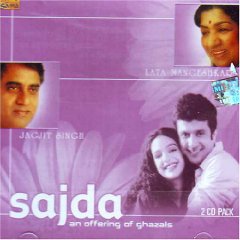
Sajda (1991)
Jagjit Singh and Lata Mangeshkar (two volumes)
- Dard se mera daaman bharde ya allah
Lyric: Qateel Shifai - Kabhi yun bhi
Lyric: Bashir Badr - Tujhse milne ki saza denge
- Gham ka khazana tera bhi hai mera bhi
Lyric: Shahid Kabir - Kisko qaatil mein kahoon
Lyric: Ahmed Nadeem Qasmi - Dil mein ab dard-e-mohabbat ke siva kuchh bhi nahin
- Har taraf beshumar aadmi
Lyric: Nida Fazli - Aankh se door na ho
- Meri Tasveer mein rang aur kisi ka to nahin
Lyric: Muzaffar Warsi - Mausam ko isharon se bula kyon nahin lete
Lyric: Zafar Gorakhpuri - Allah jaanta hai
Lyric: Akhtar - Dhoop mein niklo ghataon mein nahakar dekho
Lyric: Nida Fazli - Dhuan banake fiza mein uda diya mujhko
- Mili hawaon mein udne ki woh saza yaaro
- Tere jalwe ab mujhe
Lyric: Saba Afghani
Jagjit Singh Punjabi Hits
Featuring songs from the Latest “Diva Bale Sari Raat” and the earlier hit “Long-Da-Lishkara”
EMI: CDNF 1.40008
Only 4 of the ten tracks on this disc are sung by Jagjit (though he has set the music for all ten). Of course it’s still worth buying if only for the songs from Diva bale saari raat.
Diva Bale Sari Raat
- Music: Jagjit Singh
- Diva Bale Sari Raat
Singer: Jagjit Singh
Lyric: Ranjit Rana & Hakim SuffiIf there’s a song by Jagjit that touches you as profoundly within the first 5 seconds, I haven’t heard it. This track is perfect, if only for the tone with which Jagjit begins the song. - Main Teri Aa
Singer:Chitra Singh
Lyric: Satwant Kainth - Boliyan
Singers: Minoo Purshottan & Meghna
Lyric: Traditional - Lori
Singer: Chitra Singh
Lyric: Harpal TiwanaThe range of Chitra’s voice is used to good effect in this song, as usual her Punjabi songs seem to be much finer than the Urdu ghazals. Lori in particular is saturated with emotion. The music in Chitra’s voice can leave one immobile. Jagjit has used rather unorthodox musical effects in this one, sounds that are natural more than anything else. There is technical proficiency in the instruments used, but Chitra’s voice overpowers the music. - Dama Dam Mast Kalandar
Singers: Vinod Sehgal & Chorus
Lyric: TraditionalLong-da-Lishkara Music: Jagjit & Chitra Singh - Sare Pindch Puare Paye
Singer: Jagjit Singh
Lyric: Inderjit Hassanpuri - Long-da-Lishkara
Singers: Minoo Purshottam, Dilraj Kaur & Vinod Sehgal
Lyric: Gurdas Mann - Mein Kandyali Thor ve
Singer: Jagjit Singh
Lyric: Shiv Kumar Batalvi - Ishq Hai Loko
Singer: Jagjit Singh
Lyric: Sikander Bharati - Chhala
Singer: Gurdas Mann
Lyric: Gurdas Mann
Adaa
Jagjit Singh & Lata Mangeshkar (1992)
- Dono ke dil hai
- Jab kisi se koi gila rakhna
- Main naseeb hoon
- Main kaise kahoon jaaneman
- Kahe ab ki ae bahar
- Ya to mit jaiye
- Are too pawan basanti
- Hum dosti ehsaan wafaa
- Tum saaz chhedo
- Kisi nun koi pyaar na kare.
In Search (1992)
Jagjit Singh
- Apne hoton par sajana chahata hoon.
- Dosti jab kisise ki jaaye
- Kaheen aisa na ho daman jalalo
- Ya to mit jaiye ya mita deejiye
- Kaise kaise haadse sahte rahe
- Khamoshi khud apni sada ho
- Bebasi jurm hai hausla jurm hai
- Jab kisi se koi gila rakhna
Rare Gems Ghazals (1992)
Jagjit & Chitra Singh Their Earliest Recordings
EMI: CDNF 152041
This album has the appropriate title, the ghazals compiled here are among the earliest recordings available, and they are certainly Rare Gems. This album is a must buy for any serious Jagjit & Chitra fan. Perhaps the most interesting aspect of the record is the progression in Jagjit’s style that is painfully obvious. The earliest records have Jagjit straining his voice in a lilting classical style and one can see this change in the later records till we finally come across the Jagjit we know so well. The cover of the CD is quite amusing, perhaps second only to the cover on the “Live at Royal Albert Hall” disc. Jagjit looks like a relic out of 70s on the cover. In all seriousness, these 18 ghazals are among the finest by Chitra and Jagjit that you will find anywhere, it’s a must have.
- Apna gham bhool gaye (1966)
Lyric: Faruk Kaiser
Music: C. K. Chauhan - Saqiya hosh kahan tha (1966)
Lyric: Shamim Shahabadi
Music: C. K. Chauhan - Yeh kis ka tasavvur (1970)
Lyric: Jigar Moradabadi
Music: Jagjit Singh - Mujhe de rahen hain tasalliyan (1970)
Lyric: Jigar Moradabadi
Music: Jagjit Singh - Woh jo ham mein tum mein qarar tha (1970)
Lyric: Momin (Traditional)
Music: Jagjit Singh - Bas ke dushwar hai (1970)
Lyric: Ghalib (Traditional)
Music: Jagjit Singh - Ab to ghabrake yeh kahte hain (1973)
Lyric: Zauq (Traditional)
Music: Jagjit Singh - Kab se hoon kya bataaon (1974)
Lyric: Ghalib (Traditional) - Dil ko kya ho gaya khuda jaane (1970)
Lyric: Daag (Traditional)
Music: Jagjit Singh - Shahron shahron aaj hain tanha (1969)
Lyric: Krishan Adeeb
Music: Jagjit Singh - Phir kuchh is dil ko beqarari hai (1973)
Lyric: Ghalib (Traditional)
Music: Jagjit Singh - Os pade bahar par (1974)
Lyric: Jigar Moradabadi
Music: Jagjit Singh - Ishq fana ka naam hai (1974)
Lyric: Jigar Moradabadi
Music: Jagjit Singh - Ajab apna haal hota jo visaal-e-yaar hota (1970)
Lyric: DaghDehlavi (Traditional)
Music: Jagjit Singh - Jab bhi aati hai teri yaad kabhi
Lyric: Krishan Adeeb
Music: Jagjit Singh - Dhuan utha tha diwane ke jalte ghar se (1975)
Lyric: Shamim Shahabadi
Music: Jagjit Singh - Patta patta boota boota (1970)
Lyric: Meer Taqi Meer (Traditional)
Music: Jagjit Singh - Uski hasrat hai jise dil se mita bhi na sakoon (1975)
Lyric: Ameer Meenai (Traditional)
Music: Jagjit Singh
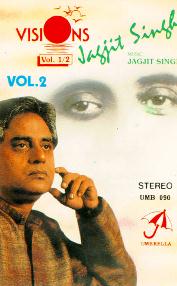
Visions, in two volumes (1992)
Performed by: Jagjit Singh
- Jhoom ke jab rindo ne pila dee
- Nazar nazar se
- Ye peenewaale bahut hi ajeeb hotey hain
- Kisne bheegay huye baalon me ye jhatka paani
- Kabhi kabhi yun bhi humne
Lyric: - Tere nisaar saqia, jitni piyoo pilaye jaa
- Na keh saaqi bahar aane ke din hai
- Darde dil mein
- Kaun aaya
Lyric: Bashir Badr - Aap aaye janab
Lyric: Rustam Sehgal Wafa - Aapko dekhkar dekhta reh gaya
Lyric: Aziz Qaisi - Koi dost hai na raqeeb hai
Lyric: Rana Sahri - Kuchh na kuch to zaroor hona hai
Lyric: Wajida Tabassum - Phir se mausan baharon ka
Lyric: Zahid - Sar jhukaaoge to
Lyric: Bashir Badr - Kal raat jahaan main tha
Lyric: Khalid Kuwaiti
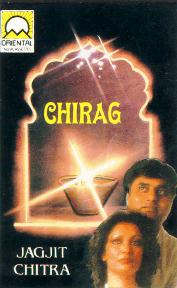
Chirag
Jagjit & Chitra Singh (1993)
- Tareef uss khuda ki jisney jahaan banaya
- Zara chehray say kamli ko hata do ya rasulla
- Ab to maray khuda mujhey jalwa
- Tujhay dhoondta ta mai charsoo
- Chirag dil key jalao key eid ka din hai
- Duniya se dil lagakar duniya se kya mila
- Suntey hai ke mil jatee hai har cheez dua sey
- Madinay ko jaayen ye jee chahta hai
Your Choice
Jagjit & Chitra Singh (1993)
- Kiya hai pyar jise
- Woh dil hi kya
- Tujhko darya dili ki kasam
- Mujhse milne ke
- Uski baten bahar ki baten
- Hum to hai pardes mein
Lyric: Rahi Masoom Reza - Zakhm jo aapki
- Chale bhi aao
- Humsafar hota koi to
- Aaj tum se bichhad
- Nama gaya koi
- Gham mujhe hasrat mujhe
- Dil ke ujle kaagaz par
- Naho gar aashna nahin hota
- Shabe-gham mere allah
Live with Jagjit Singh (Double)
EMI: CDNF 1.52046/7: © 1993
- Introduction by Brijbhushan
- Aah ko chahiye ik umr asar honey tak
Lyrics: Mirz Ghalib - Ishq ki daastan hai pyaare
Lyrics:Jigar Moradabadi - Tere khat
Lyrics: Rajendranath ‘Rahbar’ - Aadmi Aadmi ko kya degaa
Lyrics: Sudrshan Faakir - Aap ko dekhkar dekhta reh gaya
Lyrics: Aziz Qaisi - Uskey haathon pe kuch kaapta reh gaya
Lyrics: Waseem Barelvi - Huzoor aapka bhi ehtraam karta chaloon
Lyrics: Shadaab Lahori - Jhoom ke jab rindon ne pilaa di
Lyrics: Kaif Bhopali - Meri Tanhaaiyon tum hi lagaa lo
Lyrics: Prem Warbartoni - Main nashe mein hooN
Lyrics: Shahid Kabir - Mainu tera shabaab lai baitha (Punjabi)
Lyrics: Shiv Kumar Batalvi - Chaand ke saath kai dard puraaney nikle
Lyrics: Amjad Islam Amjad - Raga: Bandish
Lyrics: Darbari - Tere qadmon pe sar hoga
Lyrics: Seemab Akbarabadi - Apne Hothon par sajana chahta hoon
Lyrics:Qateel Shafai - Medley (Yeh Daulat bhi le lo, Tum itna jo muskura rahe ho, Tum ko dekha to eh khayal aaya, Ahista ahista
- Chuley agg; na ghade de vich paani (Punjabi)
Lyrics: Inderjeet Hassanpuri
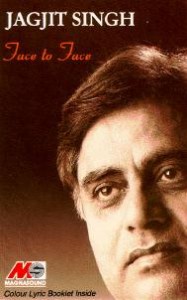
Face to Face
Jagjit Singh (1994)
Produced and Composed by Jagjit Singh
Mixing and Mastering Engineer: Daman Sood
Studio: Western Outdoor, Bombay
Magnasound: C4-Z1230
- Sachhi Baat
Lyrics: Sabir Dutt - Dairo-Haram
Lyrics: Khamosh Ghazipuri - Be-sabab Baat
Lyrics: Shahid Kabir - Zindagi Tune
Lyrics: Rajesh Reddy - Tumne Badle Hamse
Lyrics: Daagh Dehlavi & Ameer Meenai - Pyar Ka Pahla Khat
Lyrics: Hasti - Zindagi Ai Zindagi
Lyrics: Zaqa Siddiqi - Sheikh Ji
Lyrics: Sudarshan Faakir - Koi Mausam (not on cassette)
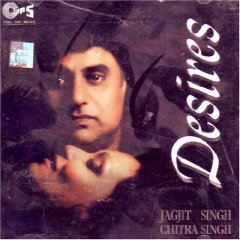
Desires (1994)
- Din aa gaye shabab ke, aanchal sambhaaliye
- Abke baras bhi woh
- Gulshan ki faqat kaaton se nahin
Lyric: Saba Afghani
Music: Jagjit Singh - Kanto ki chubhan
- Yeh kaisi mohabbat
- Jab naam tera pyar se
Lyric: - Shamm-e-mazar thi
- Baat saaqi ki na Tali jaayegi
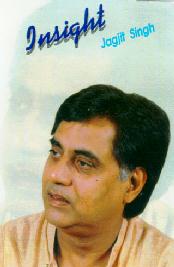
Insight
Jagjit Singh (1994)
Lyrics: Nida Fazli
Santoor: Surendra Sharma
Tabla Girdhar Prasad, Abhinav Upadhaya
Dholak: Narayan Sonu
Violin: Deepak Pandit
Guitar: Arshad Ahmed
Bass: Tony Vaz
Synthesizer: Anjan Biswas
Recording Engineer: Hassan Sheikh
Weston-3BXH-2186
This is possibly the most philosophical set of ghazals Jagjit Singh has ever sung. They run the entire gamut, from the clarity of yeh zindagi to the wandering metaphors in garaj baras. Certainly Nida Fazli has outdone himself here, and Jagjit Singh infuses just the right amount of reflection into his voice to balance the apparent agon.
- Garaj baras pyaasi dharti parThis ghazal has more allusive metaphors than I can enumerate and it never fails to move me to consideration. What I like about Jagjit’s rendering is the movement between a slurring chant and the clarity that enters his words when he encounters something new in the song. This is a trip if there ever was one.
Lyric - Main roya pardes mein bheega maa ka pyar
- Badla na apne aap ko jo the wahi rahe
- Yeh zindagi aaj to tumhare
- Jeevan kya hai chalta phirta ek khilona hai
- Muh ki baat sune har koi dil ke dard ko jaane
- Apna gam leke kahin aur na jaaya jaaye
- Chaand se phool se ya meri zuban se suniye
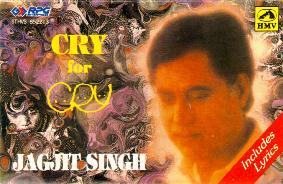
Cry for Cry
Jagjit Singh (1995)
Music: Jagjit Singh
Recorded by: Daman Sood & Avinash Oak
Cover: Chien Wien Lee
HMV: STHVS-852213
A brief article on the Cry project and Jagjit Singh.
- Ab main ration ke kataron mein nazar aata hoon
Lyric: Khaleel Dhantejvi - Aaj ke daur mein ae dost ye manjhar kyoon hai
Lyric: Sudarshan Faakir - Maa sunao mujhe woh kahani
Lyric: Nandlal Pathak
Singer: Siza Roy - Kabhi ansoo kabhi khushi bechi
Lyric: Abu Taalib - Apne chehare se jo jhahir hai chhupayen kaise
Lyric: Waseem Barelvi - Mujh mein jo kuchh achchha hai sab uska hai
Lyric: Kashmirilal Zakir - Woh rulakar hans na paya der tak
Lyric: Nawaz Deobandi - Lab pe aati hai dua banke tamanna meri
Lyric: Dr. Iqbal
Singers: Siza Roy and chorus of school children
Mirage
Jagjit Singh (1996)
HMV STHVS-852217
- Ek brahman ne kaha hai
- Main na hindu na musalman
- Zindagi se badi saza hi nahin
- Mai rahe, meena rahe
- Apni marzi se kahan
- Rishta kya hai tera mera
- Dushman ko bhi seene
- Se lagana nahin bhoole
- Koi chaudhvi raat ka chand bankar
Unique: Jagit Singh
TIPS: TEI-5001
Music: Jagjit Singh
Recorded by Daman Sood
- Tera Chehra Kitna Suhana Lagta Hai
Lyric: Kaif Bhopali - Maan Mausam Ka Kaha
Lyric: Bashir Badr - Bas Ake Waqt Ka Khanjar
Lyric: Krishan Bihari Noor - Mere Qareeb Na Aao
Lyric: Sabah Sikri - Aap Se Gila Aap Ki Qasam
Lyric: Sabah Sikiri - Mujhe Ghussa Dhikhaya Jaa Raha Hai
Lyric: Sheri Bhopali - Kaun Aayega Yahan
Lyric: Kaif Bhopali - Bujh Gayee Tapte Hue Din Ki Agan
Lyric: Pandit Vindo Sharma - Tera Chehra Kitna Suhana Lagta Hai
Lyric: Kaif Bhopali
Selections from Films
Jagjit and Chitra. CD
- Hum to yun apni zindagi se mile
- Jaise betaab dil ko karaar aa gaya
- Na mohabbat na dosti ke liye
- Main aur meri tanhai
- Mere darwaze se ab chand
- Hum bhi sharabi tum bhi sharabi
- Mera geet amar kar do
- Tamannaon ke behlave mein
- Tum nahin aaye abhi
- Main aur meri tanhai
- Nashili raat mein
- Main ghar mein chunariya
The Greatest Punjabi Hits of Jagjit and Chitra
EMI: CD-PSLP-5275
The songs in this album are mixed, some of them are typically light-hearted punjabi ditties and there are others that move. They might be difficult to appreciate if you don’t understand Punjabi, but Jagjit’s voice flows in Punjabi in a manner very different from his handling of Urdu/Hindi. Worth it if only for the shift in intonation. Chitra is very god with the punjabi as well, her voice has the sharpness I like in punjabi singers. Shiv Batalvi‘s lyrics especially are rendered beautifully by both singers. The music is rustic, and Jagjit has used the complete range of instruments a folk singer would. This is my favourite disc by Chitra & Jagjit.
- Sare pindch puare paye
Lyric: Inderjeet Hassanpuri
Music: Jagjit & Chitra Singh
Film: Long da Lishkara - Ishq hai loko
Lyric: Sikandar Bharati
Music: Jagjit & Chitra Singh
Film: Long da Lishkara - Main kandyali thor ve
Lyric: Shiv Kumar Batalvi
Music: Jagjit & Chitra Singh
Film: Long da Lishkara - Ghamaan di raat lammi ab
Lyric: Shiv BatalviIt isn’t often that a poet asks for the death of his muse. Yet the concept of muse doesn’t port well into this environment, for Shiv it is the consciousness of his sorrow that drives him to write.
Music: Jagjit Singh - Umraan de sarwar
Lyric: Shiv Batalvi
Music: Jagjit Singh - Maye ni maye mere geetan de nainan vich
Lyric: Shiv Batalvi
Music: Jagjit Singh - Rog banke reh gaya
Lyric: Shiv Batalvi
Music: Jagjit Singh - Eh mera geet kise na gaana
Lyric: Shiv BatalviIronic beyond comprehension, a song Shiv writes and at the same time denies to anyone else the pleasure of singing. If Shiv were a god, the homage we could pay him would be to listen to his voice or not listen at all.
Music: Jagjit SinghPerfect song, evokes the image of a poet on the street corner, perhaps strumming a thumri. The song itself contains the self-reflexivity found in ghazals but here ported into a ‘folkish’ setting. - Tusin kehri rutte aaye
Lyric: Shiv Batalvi
Music: Jagjit SinghChitra is very good in this one, unusual movement through a difficult song, I love completely the manner in which she halts between words and syllables, gives the song a pathos all its own. - Raat gayee kar tara tara
Lyric: Shiv Batalvi
Music: Jagjit SinghA slower song, and solitary as well. Perfect for a very late evening in Punjab, preferably somewhere the stars are still visible. Must remember next time I’m there. The tone is heavy, yet Jagjit at times almost slurs the words, a different sort of sadness. - Jaach mainu aa gayee gham khaan di
Lyric: Shiv Batalvi
Music: Jagjit Singh - Yaariya rab karke
Lyric: Shiv Batalvi
Music: Jagjit Singh - Maye ni main ik shikra yaar banaya
Lyric: Shiv Batalvi
Music: Jagjit SinghJagjit carries this song on his voice alone, the music is subsumed by the rhythm in his voice. Another reflective song, the unobtrusive nature of the music almost turns it into a wail. Perhaps the most significant sense I get from this (short) poem is a slow realization of lost innocence, yet there is an element of denial and almost a desire for reaffirmation, as one were afraid of making such a judgement alone. - Dhai din na jawani naal chaldi
Lyric: Inderjeet Hoshiarpuri
Music: Jagjit SinghA much lighter song, in this case from a live concert. The enthusiasm of the audience would almost convince one this is a wedding and we’re invited. Jagjit is then just the “uncle” who remembers boliyan well. - Charkha mera rangla
Lyric: Inderjeet Hoshiarpuri
Music: Jagjit Singh - Boliyan
Lyric: Anjaan
Music: Jagjit Singh